What is Tanzania Like in September?
What Is Tanzania Like in September?

Tanzania in September offers warm days, cool mornings, dry landscapes and consistently rewarding wildlife viewing. As water becomes scarce and vegetation thins, animals are generally easier to find around rivers, springs and other permanent water sources.
It is one of Tanzania’s most popular safari months, but choosing the right areas, travelling at the right pace and having an experienced guide can make an enormous difference to the quality of the journey.
Is September a Good Time for a Tanzania Safari?
September is an excellent month for a safari in Tanzania, particularly for travellers whose priority is wildlife.
It falls towards the end of the long dry season, when grasses are shorter and animals can often be seen more clearly. Wildlife tends to gather around dependable water sources, while dry roads make it easier to explore different parts of the national parks.
The conditions suit both first-time safari travellers and experienced safari-goers returning to Tanzania for a more considered journey.
September is also a particularly rewarding month for photography. Golden light, pale grasses and dry-season dust can create beautifully atmospheric scenes. However, it is important to remember that this is a wild environment. No responsible safari company or guide can guarantee a particular sighting or river crossing.
What Is the Weather Like in Tanzania in September?
September is generally dry, with warm daytime temperatures and relatively low humidity across Tanzania’s northern safari circuit.
During the day, temperatures are usually comfortable to warm. Early mornings, evenings and open-vehicle game drives can feel surprisingly cool, particularly around the Ngorongoro Highlands and on the crater rim.
Rain is uncommon, although local conditions can always vary. The first short rains usually begin later in the year, but nature does not work according to a fixed calendar.
For a September safari, we recommend packing:
- Lightweight, neutral-coloured clothing for daytime
- A warm fleece or jacket for early game drives
- A lightweight windproof outer layer
- A hat and good-quality sunscreen
- Comfortable closed shoes
- Sunglasses
- A scarf or buff for dry-season dust
- Binoculars
- Any personal medication
- Insect repellent, regardless of the season
Layers are far more useful than one heavy garment. Temperatures can change considerably between an early departure and the middle of the day.

What Wildlife Can You See in September?
Tanzania supports exceptional wildlife throughout the year. September’s dry conditions often make animals easier to locate because they are drawn towards permanent water.
Depending on the area, sightings may include:
- Lion
- Leopard
- Cheetah
- Elephant
- Buffalo
- Giraffe
- Zebra
- Wildebeest
- Spotted hyena
- Hippopotamus
- Warthog
- Several species of antelope
- An extraordinary variety of birds
Successful wildlife viewing is not simply about driving until an animal appears. It involves reading tracks, understanding calls, recognising changes in behaviour and knowing when to stop and wait.
An experienced guide may notice vultures descending in the distance, impala staring fixedly into thick vegetation or guinea fowl calling differently from normal. These small clues can lead to some of the most memorable encounters of the journey.
Where Is the Great Migration in September?
During September, large numbers of wildebeest and zebra are often found in the northern Serengeti and the wider Mara–Serengeti ecosystem.
River crossings may occur during this period, but they are never guaranteed. Herd movements depend on rainfall, grazing conditions and the availability of water. The animals can cross a river repeatedly, remain in one area for days or move sooner than expected.
The Great Migration is also only one part of Tanzania’s wildlife story.
A safari should not become a frantic attempt to tick off a river crossing while ignoring everything else happening around you. Predators, resident herbivores, smaller animals, birds and fascinating behavioural encounters can be found well beyond the main migration herds.
The best itineraries treat the migration as a natural event to be understood and observed, not as a performance scheduled for visitors.
What Is the Serengeti Like in September?
By September, much of the Serengeti has taken on the pale gold and muted earth tones associated with the dry season.
Shorter grass and reduced surface water can improve visibility. Predators may be found resting near river systems, rocky outcrops or areas where prey species congregate. Elephants, giraffes and resident antelope continue to move through the wider ecosystem.
The Serengeti is enormous, and conditions differ considerably between its northern, central, western and southern regions. An area that appears quiet at first can suddenly produce an extraordinary sighting, while a famous location can occasionally feel unexpectedly still.
This is why we prefer not to treat the Serengeti as a simple list of places to visit. Route planning should consider wildlife movement, road conditions, seasonal patterns and the overall pace of the journey.
Time is one of the greatest luxuries available on safari. A carefully paced itinerary allows guests to remain with an interesting sighting rather than immediately rushing towards the next vehicle gathering.

What Is Ngorongoro Like in September?
The Ngorongoro Crater offers reliable year-round wildlife viewing and combines naturally with a Serengeti safari.
September is generally dry inside the crater, with wildlife concentrated around its grasslands, springs and remaining water sources. The crater can support lion, elephant, buffalo, spotted hyena, hippopotamus and, with patience and good fortune, black rhinoceros.
Temperatures on the crater rim are considerably cooler than on the plains below. Early mornings can be cold, especially when travelling in an open vehicle or departing before sunrise.
Ngorongoro is one of Tanzania’s most famous wildlife destinations and can become busy. Departure timing, route selection and the willingness to move away from congested sightings all contribute to a better experience.
A good guide will not merely try to place you beside the greatest number of vehicles. The objective is to understand what is happening and find the best responsible position from which to observe it.
Is Tanzania Crowded in September?
September falls within Tanzania’s popular dry-season travel period, so certain parts of the Serengeti and Ngorongoro can attract considerable visitor numbers.
That does not mean every September safari will feel crowded.
The experience depends on:
- Which areas you visit
- Where your camps are located
- How long you stay in each area
- What time you begin game drives
- Whether your itinerary allows flexibility
- How your guide responds to vehicle congestion
- Whether you have access to a private safari vehicle
Sometimes avoiding crowds means leaving earlier. On other occasions, it means waiting a little longer, choosing a quieter route or resisting the temptation to race towards every reported sighting.
Thoughtful planning cannot remove every other vehicle from a famous national park, but it can dramatically improve how you experience it.
Is September Good for Safari Photography?
September can be an outstanding month for wildlife photography.
The dry landscape creates a clean visual environment, while early and late light brings warmth and texture to the grasslands. Dust can produce dramatic backlighting around moving elephants, wildebeest and buffalo.
Shorter vegetation can make animals easier to photograph, but the most compelling safari images are not always tight portraits. Wider photographs that include the landscape often tell a more complete story of the animal and its environment.
Photographers should consider bringing:
- A telephoto lens for wildlife
- A shorter lens for landscapes and environmental portraits
- Spare batteries
- More memory cards than they think they will need
- A dust cloth or basic lens-cleaning kit
- A beanbag or suitable camera support
Good photographic guiding is not limited to finding animals. It also involves understanding light, anticipating movement and positioning the vehicle without disturbing the subject or blocking other guests.

Is September Suitable for a First Tanzania Safari?
Yes. September offers many of the conditions first-time safari travellers hope to experience: good wildlife visibility, largely dry weather and access to several of Tanzania’s best-known ecosystems.
However, Tanzania is not only suited to first-time visitors.
Experienced safari travellers often appreciate returning at a slower pace, spending longer in selected areas and paying closer attention to behaviour rather than concentrating exclusively on seeing the greatest number of species.
The quality of a safari is rarely determined by the length of the wildlife checklist. It is determined by the understanding, context and time surrounding each encounter.
Is a September Safari Physically Demanding?
A traditional vehicle-based Tanzania safari does not usually require a high level of physical fitness.
Most wildlife viewing takes place from a safari vehicle, although guests should be comfortable climbing into and out of the vehicle and sitting for longer periods on occasionally uneven roads.
Some camps may have steps, gravel paths or distances between the guest areas and rooms. Anyone with mobility concerns should discuss these before confirming a safari so that appropriate accommodation and assistance can be arranged.
Early starts are common, but a privately guided or thoughtfully structured journey can include rest periods and a pace suited to the guests.
What Are the Advantages of a Small Safari Group?
A genuinely small group allows for greater flexibility, better communication with the guides and a more personal atmosphere. It can also make a considerable difference to vehicle comfort. Guests have more space for camera equipment, binoculars and personal belongings, while guides can respond more easily to individual interests. For couples, a very small group offers a useful balance. There are other like-minded travellers with whom to share the experience, but the journey does not feel like a conventional escorted coach tour.
The composition of the group matters just as much as its size. Shared expectations around pace, wildlife, photography and respectful travel help create a more enjoyable experience for everyone.
What Should You Look for When Choosing a September Safari?
The name of a lodge is only one part of a much larger decision.
Before booking, ask:
- How much time will be spent in each wildlife area?
- Will you have a private vehicle or share scheduled game drives?
- Who will guide the journey?
- Will the same guide remain with you throughout?
- How many guests will be in the group?
- Are park fees, internal transfers and meals included?
- Does the itinerary allow enough time to observe wildlife properly?
- Has the itinerary been designed for September’s conditions?
- Is there support before and during the journey?
- What costs are not included?
A beautiful room is enjoyable, but it cannot compensate for a rushed itinerary, an overcrowded vehicle or indifferent guiding.
The greatest value usually comes from the people, places and decisions that materially improve how you experience the destination.
Experience Tanzania in September 2027
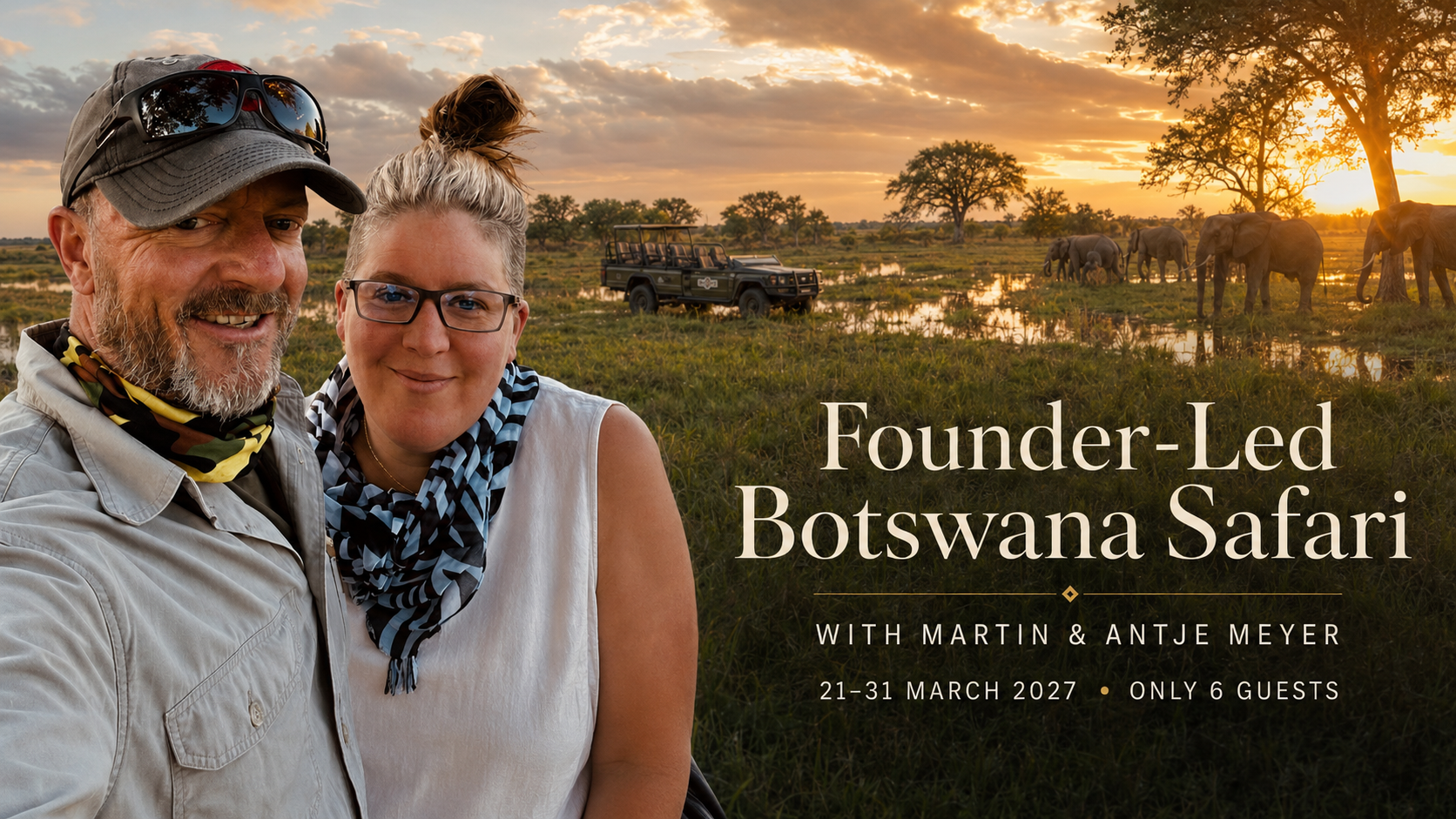
Martin Meyer Safaris will travel through Tanzania from 10 to 22 September 2027 on an intimate, personally hosted and co-guided journey with Martin and Antje Meyer.
The 12-night itinerary combines the Ngorongoro region with the Southern and Central Serengeti, using private safari vehicles and allowing time to understand the landscapes and wildlife rather than simply moving from one sighting to the next.
The group is limited to a maximum of three couples, and only three rooms remain available.
Have you always dreamed of going on safari but don't know where to start ?
We offer a complimentary 1 hour safari consultation call to simplify the process.